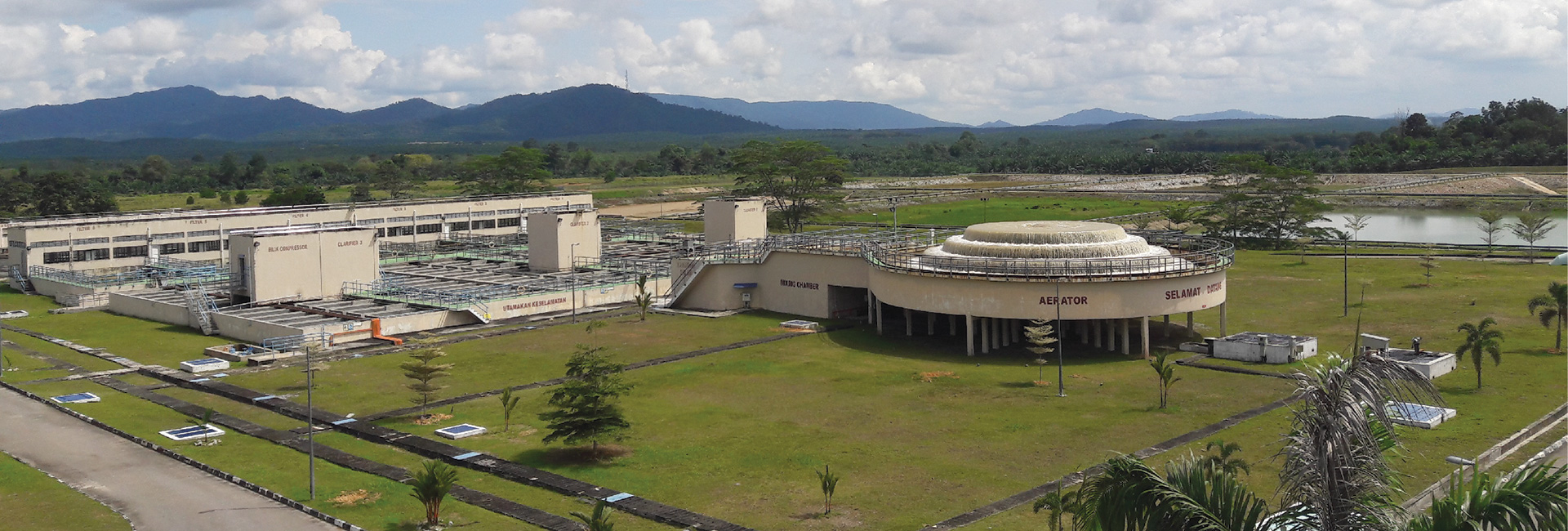
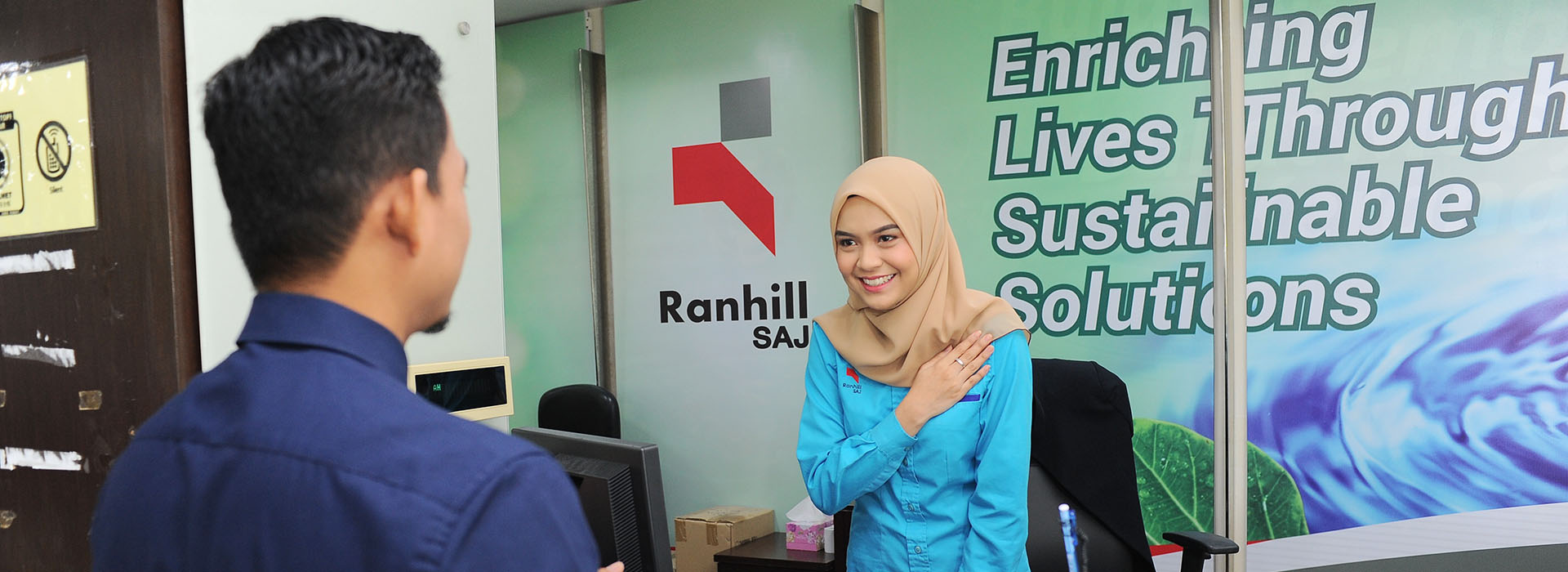
An integrated water supply company, Ranhill SAJ Sdn Bhd, was accorded the main water concessionaire and exclusive provider of source-to-tap water for Johor – Malaysia’s third most populous state – serving 99.9% of the entire state’s needs.
The state of Johor in Malaysia has the second largest water supply operations in the country with 22,000 km of pipeline and more than 1 million customer accounts. RSAJ, the licensed water operator for Johor state produces 1800 Million Liters Per Day (Mld) of treated water to supply to 3.7 million populations.
Challenged with the vast size, scattered rural population and differing conditions, NRW reduction effort in the state has to be done in a holistic manner, physically and administratively. The approach covers all aspects of water supply operations from the outlet of water treatment plants right down to customer meters, and the optimization of procedures for production and billing, through various technology.
Thus far, the NRW level for the state has reduced from 37% to 24%, saving 250 Mld in the process. Johor now has the lowest NRW losses per km per day in Malaysia at 20 m3/Km/Day.Even with the relatively small size, the state of Melaka has been having a high NRW level at 34%, prompting SAMB to embark on an NRW reduction program. Melaka state has 5,000 km of pipeline and almost 300,000 customer accounts, producing 500 Million Liters Per Day (Mld) of treated water.
Being a city state, active leakage control activities and repair works are mainly done in busy areas, requiring meticulous planning and execution. The scope for the final 2 years involved technology and knowledge transfer to SAMB personnel, to enable them to continue the effort upon RWS’ contract completion.
At the end of the contract, the NRW level for the state reduced from 34% to 21%, saving 60 Mld in the process.Kuala Lipis is one of the 14 districts in the state of Pahang with a population of approximately 90,000 and 22,000 customer accounts. Pahang state has an NRW level of exceeding 50% and would like to start reducing it district by district due to limited resources. Kuala Lipis district was chosen as the candidate after the capital Kuantan due to its high NRW level at 55%.
Kuala Lipis is a small town to the north of Pahang with majority rural areas. This proved to be a real challenge since the pipeline has to be properly mapped for an effective active leakage control.
The reduction in leakages within the system resulted in the reduction of treated water production, hence reduced production costs at the water treatment plant. At the end of the contract, the NRW level for the district reduced from 55% to 35%, saving 12 Mld in the process.The state of Kelantan is situated north of Malaysia, bordering Thailand. The water supply operation is managed by a state owned company, Air Kelantan Sdn Bhd (AKSB). AKSB manages 7,500 km of pipeline and about 250,000 customer accounts, with a treated water production of 480 Million Liters Per Day (Mld).
The Kelantan state has been facing a high NRW level of more than 50% for many years. Aged assets has largely contributed to the water losses. However, the effective reduction of NRW would involve a big capital investment and this has been a major hurdle for AKSB.
In February 2013, RWS has been awarded with a 2-year NRW reduction contract by AKSB. The scope of work mainly involves the establishment of DMAs, Active Leakage Control, Reservoir Monitoring and Pressure Management.
At the end of the 2-year contract, RWS managed to reduce the NRW level from 53% to 47%, saving 68 Mld in the process. In addition, RWS established 40 more DMAs to make a total of 190 DMAs in the state. Furthermore, more than 53,000 leaks found and repaired within the contract period.Riyadh is the capital of Saudi Arabia with a population of approximately 6.5 million, covering a vast 1,800 km2 area. Due to the lack of surface water in the country, water supply mainly comes from underground water and desalinated water from the sea.
The municipal water supply, managed by the National Water Company, is obtained from a desalination plant located 450 km away. The water scarcity and the high cost of treated water production makes water a valuable commodity in Riyadh.
The city of Riyadh experiences intermittent water supply due to shortages and therefore, leakage management is more important than ever to ensure adequate supply to customers. Intermittent supply also causes pressure surge within the system which can cause pipe breakages and supply cuts. The demanding condition posed a real challenge since leak detection activities and repairs can only be done effectively during water supply schedule with immaculate planning and coordination.
At the end of the contract, the leakage level for the 45 DMAs reduced from an average of 37% to 13%, saving 54 Mld in the process.